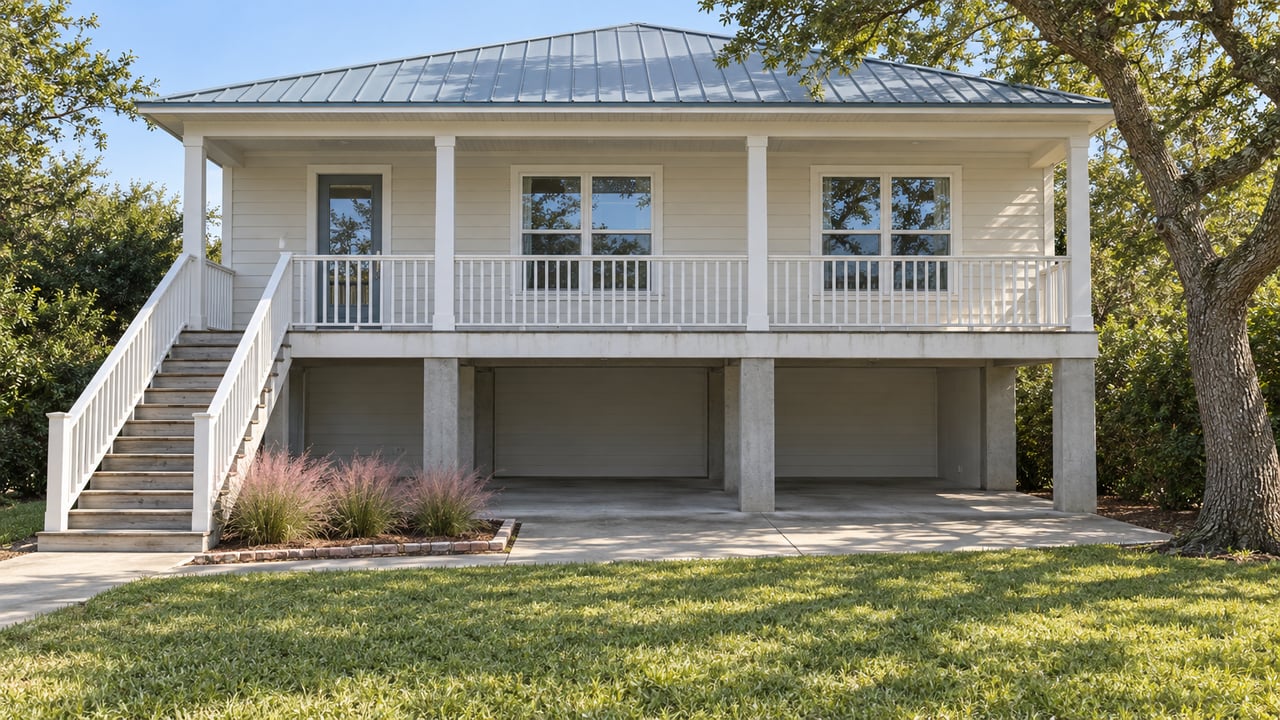
Oak Island NC Property Taxes: A Buyer's Guide to 2027 Revaluation
October 8, 2026
October 8, 2026
If you close on a home in the Town of Oak Island between now and New Year's Eve, you will own it on January 1, 2027. That is the effective date of Brunswick County's next revaluation. The Town of Oak Island's property-tax guidance says the person who owns a property on January 1 is responsible for that year's taxes. So the first full tax bill in your name will be built on values nobody has seen yet, multiplied by rates nobody has set yet.
That's why the tax figure on a listing sheet is a weak guide right now. The rate printed there, $0.20 per $100 of value for the town, is real. The last revaluation showed how loosely a rate like that tracks what an owner actually pays once values reset.
Most buyers think of property taxes as something split at the closing table. Oak Island's own guidance says it is "not uncommon" for current-year taxes to be prorated at a sale, with the seller's share usually credited to the buyer at closing. The same page says these proration agreements "do not supersede the responsibility of the January 1 owner to see that the taxes are paid."
The billing itself also changed this year. As of July 2026, Brunswick County took over tax billing and collection for Oak Island, starting with the 2026 taxes. Owners who used to get two bills, one from the county and one from the town, now get a single combined bill. The town still collects delinquent taxes for 2025 and earlier years but won't accept payments for 2026 or later. If your closing attorney is clearing an older balance on the property, that money goes to the town. The current bill goes to the county.
Annual bills are due September 1 and become past due after January 5. A fall closing lands between those two dates, so whether the 2026 bill has been paid is a question for your closing statement. The 2027 bill will be yours alone, and it will be the first one calculated on the new values.
Brunswick County's last revaluation took effect in 2023. Preliminary county data reported in December 2022 showed Oak Island real estate values up 85.01%, compared with 55.15% countywide. At the time, those figures were described as subject to change. The town's own budget documents show what happened next.
| FY 2022–23 | FY 2023–24 | |
|---|---|---|
| Town tax base used in budget | about $3.5 billion | $6.594 billion |
| Town tax rate per $100 | $0.28 | $0.16 |
| Share for beach nourishment | $0.05 | $0.03 |
| Projected town property tax revenue | about $9.501 million | about $10.292 million |
| Brunswick County rate per $100 | 48.5 cents | 34.2 cents |
The town cut its rate by more than 40%, and its projected property tax revenue still rose by roughly 8%. Both budgets assumed a 98% collection rate, and both tax base figures were budget estimates, not final audited totals. Even so, the direction is plain. A big drop in the rate came alongside more money collected, because the value each cent applied to nearly doubled.
How that played out for any one home depended on how much its own value moved compared with the town as a whole. A property that rose less than the island average could have ended up with a smaller town bill. One that rose more could have ended up with a larger one, even at the lower rate.
North Carolina law builds in some visibility here. In a revaluation year, G.S. 159-11(e) requires each local budget to include a "revenue-neutral" rate, meaning the rate that would raise about the same revenue as before the new values. The statute requires that rate to be published for comparison. It doesn't require a board to adopt it. When the FY 2027–28 budgets come out next spring, that published comparison is the most useful number a new owner can look for.
A buyer comparing tax history might see Oak Island's rate climb from $0.16 to $0.20 and read it as a tax increase. The town's records tell a different story.
In FY 2024–25, the rate was $0.16, made up of $0.13 for the general fund and $0.03 for beach nourishment. The budget also listed a separate fire district fee bringing in $743,000. When Finance Director Helen Brank presented the FY 2025–26 proposal in May 2025, she described it as balanced with no tax increase. Under that proposal, the fire fee would be eliminated and replaced by a 7-cent fire tax. The same presentation raised the stormwater fee from $7 to $10 a month.
The adopted FY 2025–26 budget set the rate at $0.20: $0.10 general fund, $0.07 fire and $0.03 beach nourishment. The same split carries into FY 2026–27. So part of the four-cent rise is a fire charge that used to be billed separately and is now in the rate. Port City Daily reported in May 2026 that the $0.20 rate would hold for 2026–27 and that the next revaluation "likely would come with another increase" in values. The article gave no estimate of how much.
Brunswick County's rate has stayed at 34.2 cents since the 2023 reset. That was the rate for FY 2024–25 and FY 2025–26, and the county recommended no change for FY 2026–27. Local coverage of the adopted budget reported it as $0.34.
The county's published schedule sets the order of events. Some steps are still upcoming as of early October 2026.
The county asks owners to be cautious about any claim of how much values or taxes will rise "whether by dollars or percentage," because the revaluation is not finished. It also says values "will not change uniformly throughout the county or even within your city or town," and that an individual assessment could go up, go down or stay the same. Anyone quoting you a confident 2027 tax figure for a specific Oak Island address this fall is getting ahead of the county's own process.
Some recurring costs follow their own schedules no matter where values land. These are the ones to confirm before closing:
For a second-home buyer weighing rental income, these line items affect carrying costs in ways the listing's tax estimate won't show.
Will my Oak Island taxes go up in 2027? Nobody can say yet. Your bill depends on your new assessed value and on the rates the county and the town adopt for FY 2028. The county expects to mail value notices in February or March 2027, and says the effect on your bill can't be known until rates are set, most likely in late spring or early summer 2027.
Who do I pay now? Brunswick County, for 2026 and later. Payments go to Brunswick County Tax, PO Box 29, Bolivia, NC 28422, or through the county's online options.
Can I prepay? Yes. The town says to write "prepay" and the parcel numbers in the memo when you send a payment to the county.
This isn't tax advice, and the county tax office and the Town of Oak Island are the final word on any specific parcel. If you're planning a fall closing on Oak Island and want to understand your tax prorations, sewer fee and utility setup before the January 1 date, Deborah Morgan is glad to go through it with you. Let's Connect.
Stay up to date on the latest real estate trends.

Helping Buyers and Sellers Navigate the Sunset Beach Market with Confidence.
Debbie Morgan
502 N Sunset Blvd Sunset Beach NC 28468