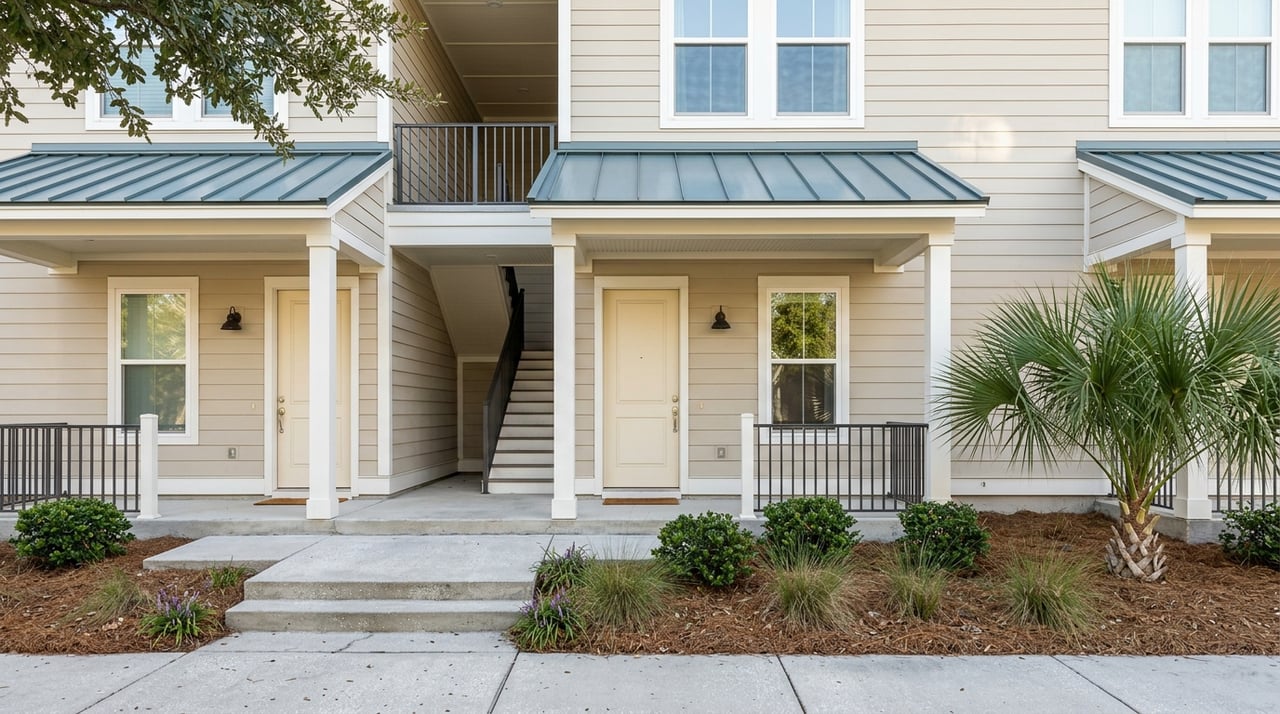
Oak Island Condos and Townhomes: Which Fits Best?
June 4, 2026
June 4, 2026
If you love the idea of owning a place at the beach but do not love the idea of constant exterior upkeep, a condo or townhome in Oak Island may be the right fit. Many buyers want a simpler way to enjoy coastal living, whether that means a second home, a downsizing move, or a property with easier day-to-day ownership. In Oak Island, these homes can offer practical access to the beach, shared maintenance, and amenities that support a more relaxed routine. Let’s dive in.
Oak Island is especially appealing if you want beach access without the workload that can come with a larger detached home. The town maintains 65 public beach access locations and provides water-safety stations at all of them. During paid-parking season, Town residents and property owners can also obtain resident parking permits, which can make beach visits more convenient.
That setup matters if you are buying for seasonal use, retirement, or a lock-and-leave lifestyle. You may be able to enjoy the shoreline without managing a big yard, a private beach path, or as much exterior maintenance. It is a practical match for buyers who value convenience as much as location.
Oak Island’s beach rules also shape ownership in a helpful way. Access must use designated walkovers, dunes cannot be crossed, and beach equipment must be removed by the end of each day. If you are comparing condos, townhomes, and houses, these details can influence how much hands-on work you want your property to require.
In North Carolina, condos and townhome-style communities are not always structured the same way. Condominiums are generally governed under Chapter 47C, while many townhouse-style communities are organized as planned communities under Chapter 47F. The important takeaway for you is that each community’s declaration defines what you own directly and what is maintained in common.
That means the ownership experience can vary more than the property label suggests. Two homes may both look like townhomes, but one association may handle more exterior work than another. The same is true for condos, where the association often manages significant shared elements of the building and grounds.
If your goal is easy ownership, do not stop at the listing description. Look closely at what counts as your responsibility versus the association’s responsibility. That is often the difference between a truly low-maintenance property and one that still asks a lot from you.
Association dues are a core ownership cost, not an optional extra. In these communities, dues can help pay for maintenance, repairs, insurance, utilities, and expenses tied to common elements or limited common elements. That is why the monthly fee should always be viewed alongside what the fee actually covers.
A lower monthly due does not always mean lower total cost. One association may include more exterior care, structural maintenance, or shared insurance, while another may shift more of those costs to individual owners. In a coastal market like Oak Island, that difference can be significant.
When you compare options, ask simple but specific questions:
These questions can tell you more about true ownership cost than the list price alone.
Recent Oak Island condo listings often highlight features that support a low-stress coastal lifestyle. Common examples include elevators, community pools, covered parking, beach access, picnic or grilling areas, and maintenance of the grounds or structure. Some communities also include water, trash, or cable in the association package.
These features are a big reason many buyers choose condos at the beach. You may get the lifestyle benefits of the location without taking on the same level of upkeep as a detached home. For many second-home buyers and downsizers, that tradeoff makes a lot of sense.
The town also adds to the appeal with public amenities and destinations such as the Oak Island Pier, the Par 3 Golf Course, parks, docks, and beach-access points. If you want a property that supports simple weekends, seasonal stays, or easier full-time living, those nearby features can make daily life more enjoyable.
Condos often suit buyers who want the simplest lock-and-leave setup. If you are comfortable sharing more building and site upkeep through the association, a condo may give you the easiest path to beach ownership. This option can be especially attractive if you value elevators, shared amenities, and less exterior responsibility.
Townhomes often appeal to buyers who want a more house-like layout while still sharing maintenance of common areas. You may prefer this route if you want a little more separation or a floor plan that feels closer to a single-family home. The right fit depends on the specific community documents, not just the building style.
As you narrow your search, think about the factors that matter most to your routine and budget:
The best property for you is the one that fits how you actually plan to live and use it.
When you budget for a condo or townhome in Oak Island, it helps to look beyond the mortgage payment. Inside town limits, Brunswick County’s FY 2025-26 ad valorem tax rate is 0.3420, and Oak Island’s municipal rate is 0.20. That creates a combined property tax rate of 0.5420 per $100 of assessed value.
You should also account for association dues, insurance costs, and any property-specific maintenance not covered by the association. In beach markets, insurance can be a bigger part of the budget than many out-of-area buyers expect. Getting those numbers early can help you compare homes more accurately.
If you plan to rent the property, another cost may apply. Oak Island levies a 5% occupancy tax on rentals of homes, cottages, and other lodging rented to the same person for less than 90 continuous days. That is an important detail if you are considering personal use plus rental income.
Flood and storm risk deserve careful review before you buy. Oak Island notes that ocean overwash and heavy rainfall can quickly flood inland waterways. FEMA flood maps identify Special Flood Hazard Areas and coastal hazard zones, and homes in high-risk flood areas with government-backed mortgages generally must carry flood insurance.
Timing matters too. FEMA notes that National Flood Insurance Program policies typically have a 30-day waiting period. If flood coverage may be needed, it is wise to address that early in the buying process rather than waiting until the last minute.
Wind coverage is another item to review closely. The North Carolina Department of Insurance notes that standard homeowners policies may exclude windstorm or hail coverage. In coastal areas, the North Carolina Insurance Underwriting Association, also called the Coastal Property Insurance Pool, may provide that coverage.
For condo and townhome buyers, insurance questions should include both the association policy and your personal policy. You want to understand where the master policy stops and your own coverage begins. That clarity can help you avoid surprises after closing.
North Carolina sellers of condos, townhouses, and similar residences must provide the Residential Property and Owners’ Association Disclosure Statement. The North Carolina Real Estate Commission also makes clear that disclosures are not a warranty. Items such as flood zone status, restrictive covenants, and HOA membership are considered material facts.
That is why your own due diligence still matters. Even if a home looks move-in ready and the monthly dues seem reasonable, the documents and inspections tell the full story. In Oak Island, where weather, insurance, and association structure can all affect ownership cost, this step is especially important.
A smart due diligence checklist may include:
These steps can help you choose with confidence, not just excitement.
Oak Island condos and townhomes can be a great fit if you want coastal ownership with fewer moving parts. The key is knowing that “easy” does not always mean the same thing from one community to the next. The most helpful comparison is not just condo versus townhome, but what each association covers, what your insurance needs will be, and how the property fits your lifestyle.
With the right guidance, you can sort through the details without feeling overwhelmed. If you are weighing beach access, upkeep, budget, and long-term use, a careful local approach can make the decision much clearer. When you are ready to explore Oak Island options, Deborah Morgan can help you compare properties and move forward with confidence.
Stay up to date on the latest real estate trends.
Helping Buyers and Sellers Navigate the Sunset Beach Market with Confidence.

Debbie Morgan
502 N Sunset Blvd Sunset Beach NC 28468