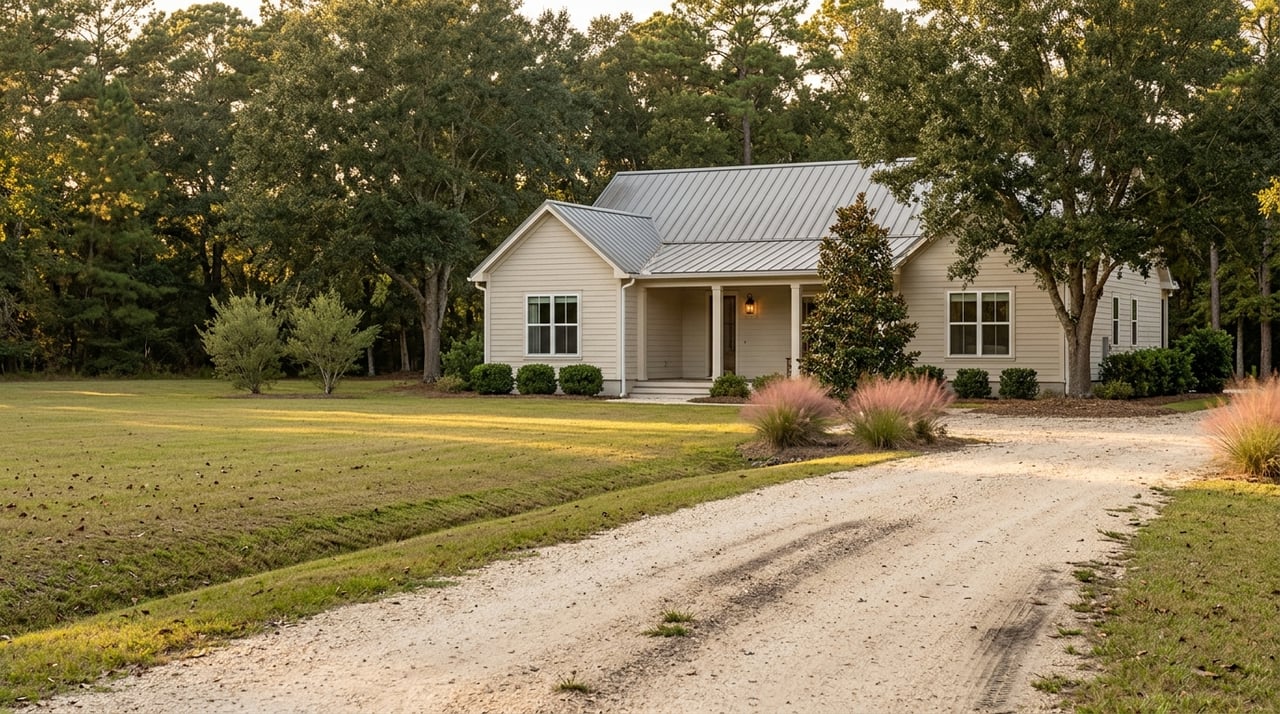
Rural Coastal Living And Acreage Opportunities In Ash
June 25, 2026
June 25, 2026
If you want more space, more privacy, and a different pace than the beach towns, Ash may deserve a closer look. This small rural community in western Brunswick County offers an inland option within a fast-growing coastal county, which can appeal if you want room to spread out without losing touch with the broader Brunswick County market. In this guide, you’ll get a practical look at what rural coastal living in Ash can mean, what kinds of properties you may find, and what due diligence matters most before you buy. Let’s dive in.
Ash is an unincorporated community in the far western part of Brunswick County, centered historically around Ash-Little River Road and Whiteville Road. County history notes that Ash-Little River Road was once used by travelers heading from inland communities toward North Myrtle Beach, which helps frame Ash as an inland alternative rather than a beach-town setting.
That distinction matters if your goal is land, privacy, or a more rural property type. You may still be buying within Brunswick County, but the lifestyle conversation in Ash is often different from what you would expect closer to the ocean or along the Intracoastal Waterway.
Brunswick County is also growing quickly. The U.S. Census Bureau’s 2025 estimate placed the county at 174,702 residents, up 27.8% from the 2020 base, and 84.6% of occupied housing units were owner-occupied in the 2020-2024 ACS. That bigger county trend helps explain why rural acreage remains relevant for buyers who want more elbow room in a growing market.
In Ash, rural coastal living is less about being steps from the beach and more about being part of the larger coastal region while enjoying a quieter setting. If you like the idea of open land, fewer nearby structures, and a property that may support residential and agricultural uses, this area can be worth exploring.
For some buyers, that means looking for a homesite with space for outbuildings or gardens. For others, it means searching for a manufactured home, a site-built home on a larger lot, or vacant land with long-term flexibility. The appeal is often practical as much as lifestyle-driven.
You may also find that rural ownership comes with more questions upfront. In Ash, the value of acreage often depends not just on size, but on access, utilities, flood status, soil conditions, and zoning.
Because Ash is in unincorporated Brunswick County, property use is governed by the county’s Unified Development Ordinance. One important district for rural land is the RR Rural Low Density Residential district, which is intended to accommodate nonresidential agricultural uses and low-density residential development.
The ordinance says development in that district should rely predominantly on individual wells and septic tank systems. That does not mean every property is the same, but it does give you a useful starting point when you are evaluating what rural ownership may involve.
Based on the county’s use tables and definitions, acreage in this part of the county may support a broad rural mix, including:
The key word is may. Zoning and allowed uses can vary by parcel, so tract-specific verification is always important before you make plans.
One of the biggest draws of acreage in Ash is the possibility of agricultural flexibility. Brunswick County’s ordinance recognizes bona fide farm operations, and the county notes that bona fide farms are exempt from zoning requirements and may have more than one principal structure and accessory structures.
At the same time, rural buyers should understand what living near agricultural activity can involve. The county’s Voluntary Agricultural District notice says nearby activity may include pesticide spraying, manure spreading, truck and machinery operations, livestock operations, sawing, and controlled burning.
That does not make a property more or less desirable on its own. It simply means you should go in with clear expectations if you are drawn to a rural setting where working land and farm operations may still be part of the landscape.
For many acreage purchases, the most important early question is how the property handles water and wastewater. Brunswick County Environmental Health issues septic system permits and well permits, and it also monitors drinking water quality for well water.
When you apply for a septic permit, the county says a Registered Environmental Health Specialist conducts a site evaluation to determine whether a septic system can be permitted. The county also notes that new wastewater systems may require documentation from a private soil consultant under state law.
Another important detail is the county’s fee schedule. If a property is not served by public water, a septic permit application must include a well permit application.
For buyers, the takeaway is simple: never assume a parcel will support your plans just because it looks buildable. Septic and well questions should be answered early.
Rural does not always mean no public water, but you should not assume service is available. Brunswick County directs property owners to check the service-area map to see whether a parcel falls within service.
The county also says all of its water customers and wholesale municipal water customers receive either all or part of their water from the Northwest Water Treatment Plant. That is useful context, but availability still needs to be verified parcel by parcel.
If you are comparing multiple tracts, utility access can become a major factor in both cost and convenience. It is one of the first details worth confirming before you get attached to a property.
Even in a rural inland location, flood and drainage risk should be part of your review. Brunswick County says Zone X and Shaded X are considered low risk and are not regulated by ordinance at this time, while VE, Coastal A, AE, and A zones carry floodplain standards and may trigger mandatory flood insurance requirements.
That makes flood-zone research more than a box to check. It can affect where and how you build, what you pay to insure the property, and how you think about future improvements.
The county also says its preliminary flood maps can be helpful for planning, but they cannot be used for regulatory or permitting purposes. If flood risk is a concern on a property you like, make sure you are reviewing the right map source for decision-making.
Road access is easy to overlook when you are focused on acreage, but it matters more than many buyers expect. Brunswick County notes that counties do not own or maintain roads in North Carolina. Public roads are maintained by NCDOT or a municipality, while private roads are privately owned and maintained by the responsible owner, HOA, POA, person, or company.
This is especially important on rural land where a long driveway or lightly traveled road may look simple at first glance. You will want to confirm whether access is public or private and who is responsible for maintenance.
The county also says emergency services can assess private-road condition for vehicle access. That can be an important question if the property sits deeper off the main road or if future construction is part of your plan.
Brunswick County’s GIS tools are especially helpful when you are evaluating acreage. The county’s GIS Data Viewer provides parcel-level ownership information, acreage, parcel dimensions, orthoimagery, tax card data, legal descriptions, and deed and plat references.
The GIS department also offers zoning maps, land use maps, soil maps, centerlines, street information, cemetery information, and municipal data. The county recommends searching by parcel ID because address matching may not always be exact.
For rural buyers, this is one of the best ways to move from a broad idea to a more informed property review. It can help you compare tracts with a clearer understanding of dimensions, boundaries, and official records.
If you are considering acreage in Ash, focus on the questions Brunswick County’s own resources point you toward. A short, practical checklist can save time and help you avoid assumptions.
Before you move forward, verify:
These are not small details. On rural land, they often shape what you can build, how you use the property, and what ownership feels like long term.
Ash can be a strong fit if you want a quieter setting within Brunswick County and value land, privacy, or rural flexibility more than immediate beach proximity. It may also appeal if you are open to doing more upfront homework in exchange for a property type that can be harder to find in more built-up coastal areas.
The right property in Ash depends on your goals. You may be looking for a homesite, a manufactured home on land, a larger residential tract, or a parcel with agricultural potential. In each case, success usually comes from matching the lifestyle vision with careful parcel-by-parcel research.
If you want help sorting through land options, property types, and the practical questions that come with buying in Brunswick County, Deborah Morgan is here to offer local guidance and personalized support.
Stay up to date on the latest real estate trends.
Helping Buyers and Sellers Navigate the Sunset Beach Market with Confidence.
Debbie Morgan
502 N Sunset Blvd Sunset Beach NC 28468